Share Exactly What the Client Needs — Nothing More
@mention a contractor on one task and they see that task. Your other clients, your rates and your personal list stay invisible.
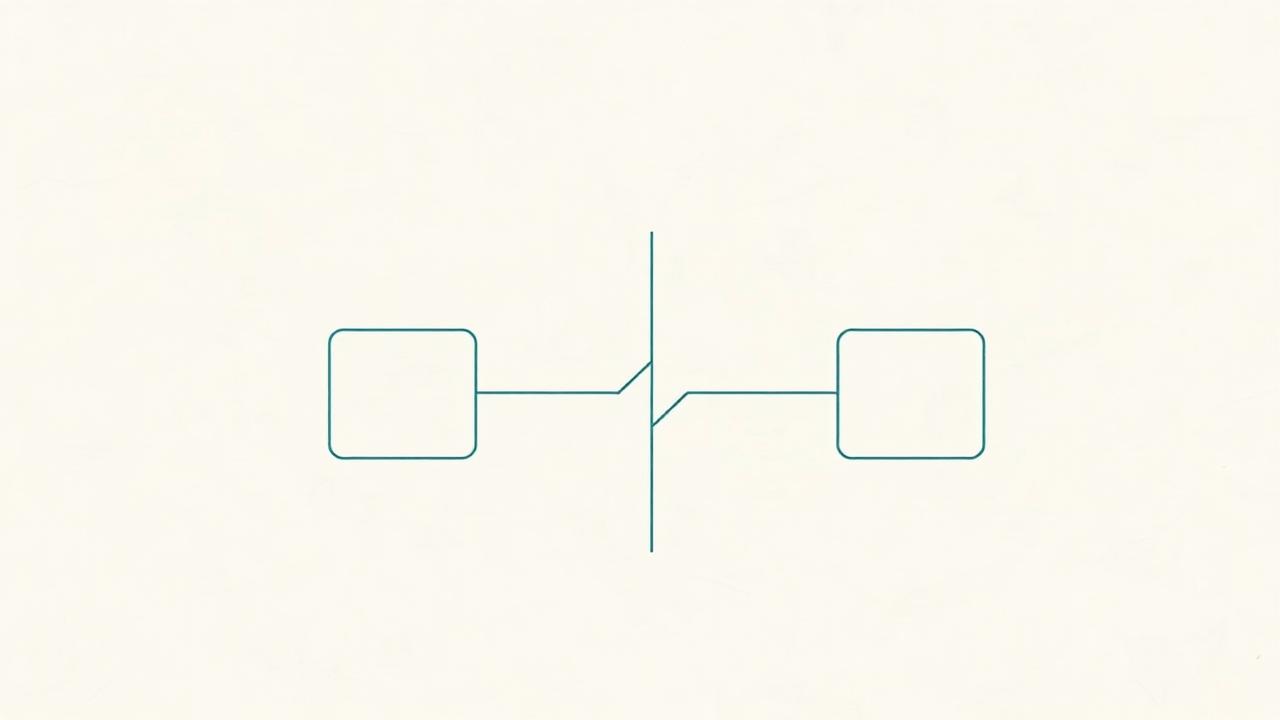
Working with clients and contractors comes with a built-in paradox. You want them to see specific things — deliverables, deadlines, status — and nothing else: not your internal notes, not your pricing, not your other clients, not your grocery list.
Most collaboration tools handle this badly. Share the whole workspace and it's too much. Export a static list and it goes stale the same afternoon. Task-level sharing solves the paradox by making the shared unit a branch rather than a workspace.
The privacy problem in collaborative tools
When a tool treats sharing as all-or-nothing — you're either on the team and see everything, or you're outside and see nothing — collaboration with partial insiders becomes awkward. Contractors, clients, advisors and vendors all live in that middle band.
The two usual escapes are equally bad. You create a separate workspace for the client, which immediately loses sync with the real one. Or you grant full access and quietly hope nobody scrolls too far.
Share the branch, keep the tree private
@mention a specific task and only that task — plus its subtask children — becomes visible to the recipient. Your Client A branch is shared. Your Client B branch, your internal strategy notes and your personal tasks are not merely hidden behind a permission check; they are simply not part of what was shared.
The shared task mirrors into the recipient's workspace at a location they choose. They organise it however they like. Your own workspace structure never leaves your account.
The unit of sharing should be a branch, not a workspace. Everything else is a permission matrix you will eventually get wrong.
Freelancer: the client as a collaborator
A freelance designer keeps Client A, Client B and personal projects in one workspace, because splitting them across three tools is how things get forgotten.
When a deliverable is ready for review, they @mention the client. The client sees the deliverable task, its status and its subtasks. They can tick off the approval task and leave a note. The designer never writes another "just checking in with a status update" email, and the other client never appears anywhere on screen.
Agency: contractor access with an off switch
An agency brings in a contractor for one project phase. @mention them on the project branch and they get everything inside it — status changes, comments, completion.
They do not get other clients, internal margin notes, account rates or anyone's personal tasks. When the engagement ends, remove the mention and the access ends with it. No offboarding checklist, no orphaned seat.
Exactly what the recipient sees
They see: the shared task and all of its subtasks, the status and history of those tasks, and any notes or descriptions attached to them.
They do not see: your workspace structure, sibling tasks at the same level, anything outside the shared branch, other people's personal workspaces, or internal context you didn't explicitly write onto the shared tasks. The boundary is the branch, and it is easy to reason about — which is the property that actually keeps people from leaking things.
Takeaways
- Partial insiders — clients, contractors, advisors — break all-or-nothing sharing models.
- Sharing a task shares its subtree, nothing above or beside it.
- Recipients organise the mirrored branch inside their own workspace.
- Removing the mention revokes access immediately.
Taskpend is a nested outliner with mirrored tasks, six views and AI agents that execute. Free for individuals.